
Gurmeet Ram Rahim Acquittal: Impunity Reigns
– By Geeta Seshu
Has impunity got a new lease of life with the acquittal of Gurmeet Ram Rahim of the murder of journalist Ramchandra Chhatrapati? No, say his family and friends, determined to appeal against the judgement of the Punjab and Haryana High Court and continue their unrelenting and marathon 24-year struggle for justice.
Gurmeet Ram Rahim, head of the politically influential religious order, the Dera Sacha Sauda, is currently in jail, serving a 20-year jail term for raping two disciples, delivered in 2017. In January 2019, he, along with three others, was convicted for the murder of journalist Ram Chander Chattrapati in 2002.
However, on March 7, 2026, in a blow to accountability for crimes against journalists, the bench of Chief Justice Sheel Nagu and Justice Vikram Aggarwal maintained that the prosecution could not prove its case of conspiracy against Gurmeet Ram Rahim but upheld the conviction against the other accused, shooters Kuldeep Singh and Nirmal Singh and the third accused Krishan Lal. Lal died during pendency of the appeal and his family was allowed to pursue the appeal.
“We are disappointed with the judgement, and we will appeal to the Supreme Court,” said Anshul Chhatrapati, the son of slain journalist Ram Chandra Chattrapati, hoping that the CBI will not delay in filing its appeal in the case.
On November 21, 2002, journalist Ram Chandra Chhattrapati, editor of a Hindi eveninger “Pura Sach”, died in a hospital in Delhi, 28 days after he was shot outside his residence in Sirsa, Haryana, by two followers of Gurmeet Ram Rahim.
One of the two shooters was immediately nabbed by local police and the other was picked up later. Bullets and a revolver were recovered from them, and they said they were given the arms by the Dera manager, Kishan Lal, who held the licence for the revolver used.
The Panchkula special CBI Court had convicted the Dera chief of murder on 11 January 2019 and sentenced him on 17 January 2019, after a thorough investigation and a 16-year-long legal battle which saw many twists and turns. His arrest in the rape case resulted in rioting by his supporters and the death of 23 persons in 2017. Ram Rahim has spent around 200 days outside prison on furlough or parole, the last being the 15th parole of 40 days granted on Jan 4, 2026.
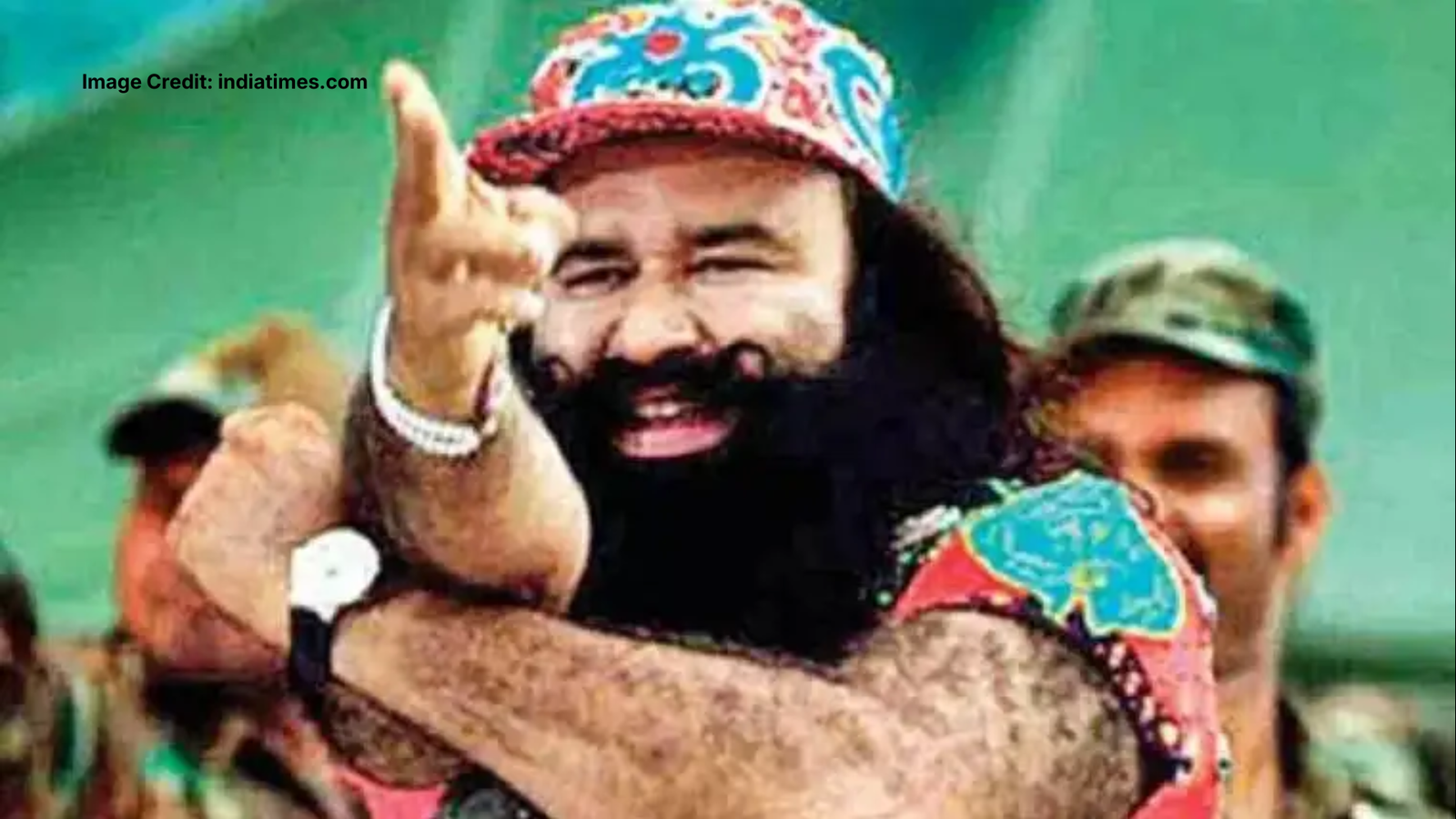
Gurmeet Ram Rahim
Ram Rahim was earlier convicted and sentenced to life imprisonment for the murder of his former manager Ranjit Singh in 2002 but secured an acquittal from the Punjab and Haryana High Court in February 2025. A case against Ram Rahim and two doctors for alleged castration of around 400 followers, filed in 2018 before the special CBI court in Panchkula, is still pending.
The genesis of the cases against the Dera chief began with the publication of an anonymous letter dated 08.05.2002, addressed to then Prime Minister of India, Atal Bihari Vajpayee, alleging the rape of two women followers and the murder of the brother of one of them. The letter was published in Amar Ujala on 17.05.2002, Punjab Kesari on 19.05.2002 and Pura Sach on 30.05.2002, and the office of the newspaper was attacked on 06.06.2022 after the publication of the letter. Chhatrapati was also a member of a rationalist group called the Tarksheel Society
In its March 2026 order, the court rejected the testimony of Khatta Singh, the driver of Gurmeet Ram Rahim, and maintained that he was an unreliable witness as he had changed his stand a number of times. According to the CBI investigating the matter, Khatta Singh, Ram Rahim’s former driver, was a witness to the conspiracy to kill the journalist. Khatta Singh was also a victim of castration and had deposed in the case of murder of Ranjit Singh and the castration case. He had resiled from his statement due to the threats he faced but mustered the courage to give his correct statement. But the court said he had changed his statement several times and was therefore unreliable.
The court said that the three accused (Kuldeep Singh, Nirmal Singh, and the deceased Kishan Lal) had acted of their own accord and that Gurmeet Ram Rahim could not be said to be part of a conspiracy to kill Chhatrapati.
The order said the “trial Court did not consider the possibility of the followers of the Dera having attacked Ram Chander Chhatrapati without the involvement of Gurmeet Ram Rahim and that the Special CBI Court did not take note of the blind faith of followers of religious and political sects, that borders of the fanatic. The trial court did not put it in the correct perspective, the order said.
Ram Rahim was a public figure and the question of whether his “staunch followers” took the step (to murder the journalist) of their own accord was not considered by the trial court. The court said, “In our country, religion, caste, sects, play an extremely important role. Lives are given and taken in the name of religion, caste, sects etc. Disputes on Temples, Masjids, Gurudwaras, are not something new for us.”
Criticising the CBI for its investigation, the court said it was a “matter of grave concern that a premier Investigating Agency adopted this kind of methodology with a view to succeed in the matter. The endeavour should have been to go to the bottom of the matter and bring out the truth.”
Impunity and silenced stories
India’s track record on impunity for crimes against journalists continues to be deplorable. The FSC report “Getting away with murder” pointed out that there were only three convictions in the 30 killing of journalists due to their professional work since 2010.
The Chhatrapati case was a landmark as his family persisted in their fight for justice against the powerful Dera chief, risking their own lives as they made long trips to courts to track the case and give evidence, with little or no police protection.
In an earlier interview, Anshul detailed the entire struggle, even the process to get the police to name the Dera chief in their FIR. On October 25, Ram Chander Chhatrapati underwent surgery and when he regained consciousness, gave a statement to the police naming Gurmeet Ram Rahim Singh as the prime suspect. Anshul Chhatrapati also gave a statement to the police. It was only in November, after performing the last rites connected with his father’s funeral that Anshul, then 21 years old, realised that the police had not included their statements in their First Information Report (FIR).
As Anshul recalled, “The Dera and the state government clearly had an understanding. The state government was putting pressure on the police to see that Dera’s name must not be in the FIR; that the police’s needle of suspicion must be turned away from it.” The police even tried another old trick –to say that the shooting was due to a property dispute. But this did not wash.
The struggle continued to get the CBI to investigate the case, to pursue the rape case. With only an anonymous letter, the CBI interrogated 18 girls and only two came forward to file complaints. The Chhatrapati siblings faced constant intimidation, bomb threats, and assault. Gurmeet Ram Rahim, who became more powerful, moved around with Z-plus security, hosted television shows where he sang and danced with his followers and even acted in two movies. Politicians openly courted him and continue to do so, every time he is released on furlough or parole.
Around six months ago, in late 2025, Anshul says his police protection was withdrawn without notice. He says, “Most people give up the fight. We got a lot of support (Advocates Ashwani Bakshi, Lekhraj Dhot and senior lawyer, RS Cheema, worked pro bono). It has been a 17-year battle for justice but now, a lot has changed.” For instance, the CBI officers who handled the case have retired (Satish Dagar, the Superintendent of Police at Central Bureau of Investigation, who investigated the case, took premature retirement in 2019) and the Dera’s political and economic clout is stronger with the ruling BJP.
But, says Anshul, they will exercise every option they have for justice: “We owe it to our father and the journalism he died for.”
Related

Commentaries