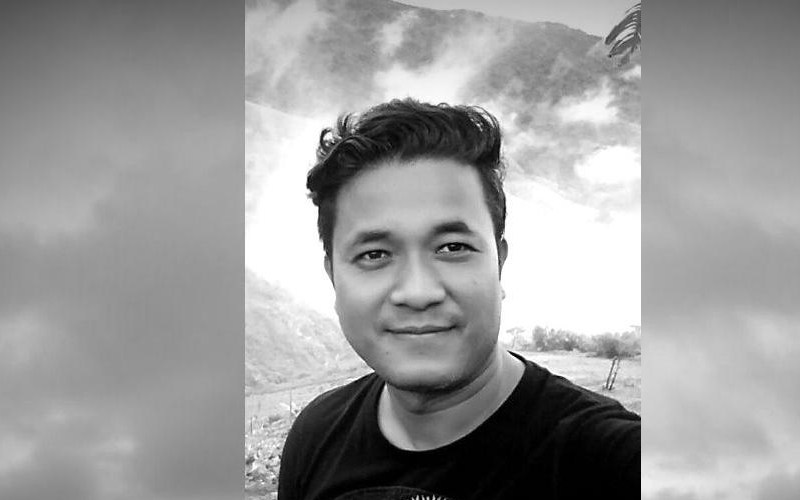
Who is Journalist Rejaz M Sydeek and Why is he in Jail for over 500 days?
A young journalist from Kerala has spent more than 500 days in a jail in Maharashtra, charged under the UAPA. As his discharge petition comes up before a sessions court in Nagpur, Ashfaque EJ and Neethu Joseph tell his story.

Rejaz was arrested days after he criticised the draconian UAPA and the imprisonment of journalists in Delhi. A police custody remand application filed by the Anti-Terrorism Squad claimed to have seized Marxist-Leninist literature and electronic devices allegedly linked to the banned Communist Party of India (Maoist) organisation from him. Rejaz has been charged under sections 38 and 39 of the UAPA, Sections 192, 353(1)(b), 353(2), and 353(3) of the BNS for “wantonly giving provocation with intent to cause riot” and “statements conducing to public mischief” and section 67 of IT Act, 2000. Ever since his arrest, Rejaz has been lodged in the High Security Solitary Confinement Cell (Anda Cell) of the Nagpur Central Jail in Maharashtra.
What put this young journalist under the spotlight of state surveillance?
Till his arrest, Rejaz had already made a mark with his hard-hitting reports demanding state accountability raised uncomfortable questions. Rejaz has reported mostly on human rights violations, systemic oppression faced by Adivasi communities across different states, extrajudicial killings, Islamophobia and oppressions faced by other minority communities.
For Rejaz, journalism was activism for justice and human rights and his investigations sought to raise issues that were buried or rendered invisible. Rejaz’s news stories published in Maktoob Media, The Observer Post and Countercurrents are not just mere news reports, but deep dives into deeper systemic issues.
Kalamassery Blast Case
Rejaz was one of the few journalists in Kerala who called out the state police’s anti-Muslim bias in the investigation related to the blast that happened at the Jehovah’s Witnesses Convention at Kalamassery in Ernakulam on October 29, 2023, which killed three people. Soon after the blast, the Kerala Police detained five Muslim men in preventive custody in various police stations. Soon thereafter, a former member of the Jehovah’s Witnesses, Dominic Martin, claimed that he carried out the attack. Rejaz’s report for Maktoob Media documented what he described as anti-Muslim bias in the police investigation and the scapegoating of Muslims in the immediate aftermath of the blast.
Soon after the report was published, a suo motu case was registered in Vadakara against Rejaz and Maktoob Media, accusing them of “giving provocation with the intent to cause a riot.” Police seized Rejaz’s phone and interrogated Maktoob Media’s founder-editor, Aslah Kayyalakkath. The case remains pending, and Rejaz’s phone has not been returned.
Rejaz subsequently appealed directly to the Communist Party of India (Marxist) leadership; the CPI(M)-led Left Democratic Front (LDF) was in power in Kerala then. In an open letter to then party General Secretary Sitaram Yechury, he questioned the party’s response to the case and contrasted it with its opposition to action against NewsClick. He argued that his report was based on interviews with the detained youths and that the police had also been approached for a response.
With no action forthcoming, Rejaz and his colleagues decided to distribute pamphlets at the Nava Kerala Sadas, a public outreach program held by the Left government, event at Kochi’s Marine Drive on December 8, 2023.
The protest was met with police intervention and an attack by members of Students Federation of India (SFI) and DYFI, student and youth wing of CPI(M) respectively, present at the venue. Rejaz and his colleague were surrounded and assaulted. Rejaz was reportedly attacked with keys and other small objects, while his colleague was thrown to the ground and repeatedly kicked. His colleague sustained a spinal disc injury and continued to suffer its effects afterwards. Police subsequently registered a case against Rejaz and the colleague alleging “drunken and disorderly behaviour.” The proceedings remain pending before the Kerala High Court.
Reports on human rights violations in Bastar
Rejaz’s reporting was not limited to Kerala. In 2024, he wrote about allegations that tribal children in Chhattisgarh’s Bastar were killed by motor shells left behind by government forces following the aerial attacks that they carried out in the region in the previous months. The same year, Rejaz reported on the arrest of 25-year-old Adivasi human rights activist Sunita Pottam over accusations that she has ties with the banned CPI (Maoist). Pottam is a renowned activist in the region known for exposing the role of paramilitary forces in killings and sexual violence against Adivasis. Her arrest was condemned by the United Nations Special Rapporteur on the situation of human rights defenders, Mary Lawlor.
In 2025, Rejaz reported on the arrest of 23-year-old Adivasi rights activist, Raghu Midiyami, from Bastar, allegedly linking him to CPI (Maoist). Both Sunita and Raghu were part of the now banned Moolwasi Bachao Manch, an indigenous organisation based in Bastar. In another 2023 report, Rejaz extensively wrote about the aerial attacks carried out by the security forces on the Adivasis of Bhattum, Kavurugatta, Meenagatta and Jabbagatta villages in the mineral rich region of Bastar.
Reports on shrinking press freedom
Press freedom was one of Rejaz’s sustained areas of reporting. He repeatedly wrote about journalists facing arrest, surveillance and state repression—often going beyond simply reporting the fact of an arrest to document the political circumstances and issues on which those journalists had been working.
In the same year that police registered a case against him over his reporting on the detention of five Muslim youths following the Kalamassery blast, Rejaz published a long-form interview with Malayali journalist Siddique Kappan. Kappan had been arrested in 2020 by the Uttar Pradesh Police under multiple provisions, including the UAPA and PMLA, while travelling to Hathras to report on the rape and murder of a Dalit woman.
Kappan’s account, as recorded by Rejaz, now reads with an unsettling relevance to Rejaz’s own subsequent trajectory. Kappan spoke of how journalists who report on Adivasis, Dalits and Muslims, or challenge state power, are increasingly portrayed as security threats and terrorists.
Rejaz similarly reported on the arrest of independent journalist Rupesh Kumar Singh, who had extensively covered state violence against Adivasis. Singh’s name later appeared among those whose phones were identified as having been compromised by Pegasus spyware.
Following the closure of the Kashmir Press Club in 2022, Rejaz interviewed a Kashmiri journalist who used the pseudonym “Freedom” about the deteriorating conditions for journalists in the Valley. Rejaz’s report captured not only the restrictions on journalism but the psychological consequences of working under continuous surveillance.
Rejaz sought to document not only what happened to journalists, but why it happened, what they were investigating, whom they were reporting about, and what their cases revealed about the shrinking space for dissent.
Ironically, the journalist who had reported on the arrest, surveillance and criminalisation of others was himself arrested and imprisoned. His own journalism, political activities and associations became part of the case against him and prompted the police to brand him “anti-national”.
Thushar Nirmal Sarathi, an advocate who mostly focuses on UAPA cases in Kerala, pointed out, “The state is adamant that the rights violations, torture and denial of justice faced by political prisoners inside jails and during trials should not reach the public. So, rights activists, legal defenders and journalists who try to address these issues and report these violations mostly face surveillance and a hunt by the state. This pattern is evident in Rejaz’s case. As a journalist and activist, Rejaz effectively raised the violations faced by undertrials and documented them on different platforms.”
Rejaz has five FIRs registered against him under bailable charges in Kerala, the last one for protesting against demolition of Kashmiri homes, which is in violation of the Supreme Court guidelines, the Fundamental Rights and Geneva Convention. He was also detained in Kerala twice for being part of pro-Palestine activism.
Rejaz had to face police action even while working for the last report that he published a month before his arrest. While in Karnataka’s Kodagu, Rejaz was detained twice by the police while he was reporting about the murder of 18-year-old Ponnanna, a coffee plantation worker who hailed from Paniya Yerava Adivasi community, allegedly by a dominant caste person in the region.
A family at standstill
Over the past 500 days, Rejaz’s absence has disrupted his entire family. “Our lives have come to a standstill. My son left home to attend an event for journalists and the next thing we hear is that he is arrested by police. Without him at home, I’m not able to do anything. I have stopped going out, stopped attending even family events. It was Rejaz who always used to accompany me earlier. I have stopped cooking non-vegetarian food, his favourite, over these past 500 days. How can I lead a normal life when my son is behind bars?” asks Rejaz’s mother Sheeba who is undergoing treatment for severe stress.
Following the arrest, Rejaz’s house in Kochi was raided by the ATS, an incident which scared the family. “His mother got so traumatised that she began closing the door and staying indoors following this. If I’m not at home, she doesn’t open the door even when someone knocks,” says Sydeek, Rejaz’s father.
Whereas, Sydeek points out that the ATS confiscated many trivial things from the house during the raid, including old phones and books, which belonged to him and not Rejaz. “I’m a history teacher and those books on political histories belonged to me. Rejaz has not even read it.”
Sydeek, a lecturer at a private educational institution in Ernakulam, resigned from his job soon after Rejaz got arrested. He is waiting for his son to secure bail and then to rejoin for work. Sydeek believes that Rejaz can get the bail order soon and it will be difficult for him then to get a leave on short notice.
Fabricated documents and inhumane treatment in prison
Following his arrest Rejaz flagged his legal counsel that the investigating agencies briefly showed him a fabricated digital document which named him as an attendee of a meeting held by Coordination of Democratic Rights Organisations (CDRO), a coalition of around 20 civil and democratic rights organisations from across India, along with Arun Ferreira, Sudhir Dhawale, both accused in the Bhima Koregaon case and Adv. Susan Abraham. It is to be noted that the fabricated document is dated between 2017-2018 when Rejaz was just 18 years old.
Rejaz has given an oral complaint to the National Human Rights Commission that the prison authorities subjected him to repeated strip searches after each court appearances despite him being under surveillance constantly. Rejaz’s father Sydeek says that the practice of strip searches was stopped in the jail where he is lodged after he raised the complaint.
He also told his family that the police called him an ‘anti-national’, ‘pro-Pakistan’ and a ‘terrorist’ in public places. According to Rejaz’s family, there have been more instances in the Nagpur prison where he was subjected to inhumane treatment, including not getting proper treatment while falling sick and lodging him in solitary confinement for 50 hours straight.
Rejaz continues to be denied bail. The family also points out that a single court isn’t consistently hearing the case. Meanwhile, Rejaz’s case also has two protected witnesses and those closely monitoring the case opine that this provision under the UAPA will adversely impact the defence case. “Introducing a protected witness in the chargesheet to sabotage an effective defence is just one of the many tactics used by the state”, says Advocate Thushar. He adds that statements of protected witnesses are often concealed in such a way that they are not useful for defence counsel.
“The defence cannot accurately interpret what testimony the witness has actually given against the accused. It is a deviation from the standard criminal law procedures in the country. Through the lens of natural justice, this is an injustice,” adds Thushar.
Systemic persecution
According to the 2026 World Press Freedom Index released by Reporters Without Borders (RSF), India’s rank rests close to the bottom of the list i.e. 157th out of 180 countries. Rejaz’s continued incarceration over the past 500 days without bail is a testament of the dwindling press freedom in the country, and more dangerously an evidence that those who question the system will be targeted and persecuted through the draconian UAPA.
Putting a young and brave journalist like Rejaz behind bars is not just incarceration of an individual. Incarcerating Rejaz also silences the voices of oppressed and marginalised communities he had been amplifying as a journalist.
(Ashfaque EJ is an independent journalist and film-maker. Neethu Joseph is an independent journalist whose work explores human rights and social justice)
Arrests
Related